


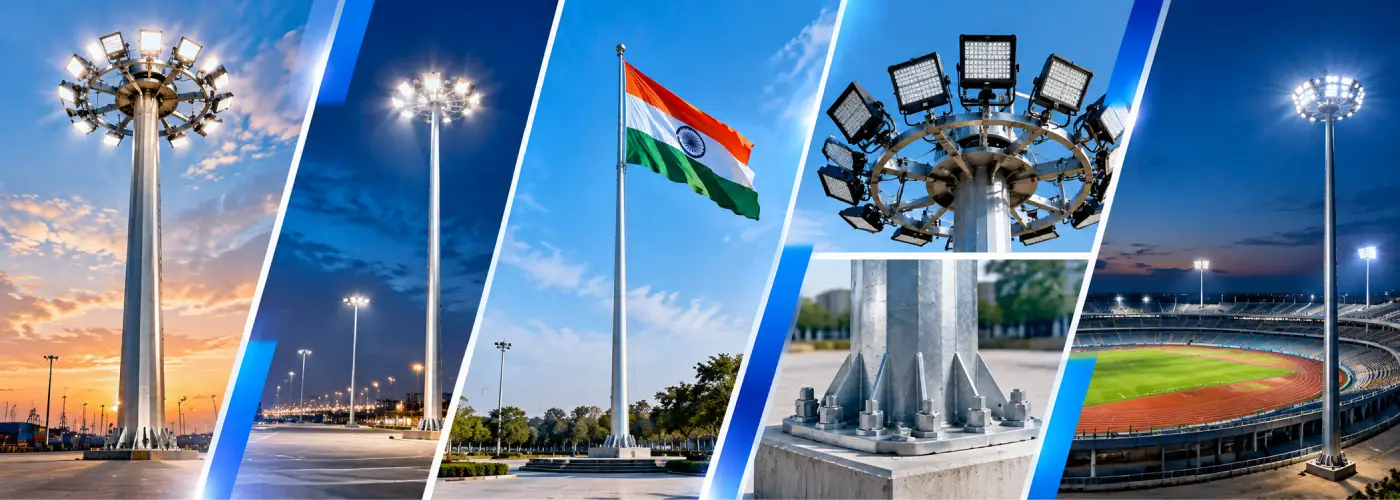
Stadium High Mast Pole Manufacturer
Stadium Lighting requires carefully positioned floodlights, structurally dependable support towers and an illumination layout suited to the sport being played. A Stadium High Mast Pole provides an elevated mounting platform for multiple lighting fixtures, helping cover large playing fields, running tracks, spectator areas and surrounding facilities.
Tara Maa Electricals is a leading Stadium High Mast Pole Manufacturer in Uttar Pradesh, Bihar, Jharkhand, Kolkata, Odisha, Karnataka, Chhattisgarh, Maharashtra, Rajasthan, Gujarat, Assam and Meghalaya requirements for sports complexes, cricket grounds, football arenas, athletic facilities and multipurpose outdoor venues. The selection of each mast should account for field dimensions, lighting targets, floodlight weight, mounting height, wind exposure and maintenance access. From community sports grounds to large sports infrastructure projects, a properly planned mast arrangement can help achieve consistent visibility while supporting the lighting equipment throughout its intended service life.
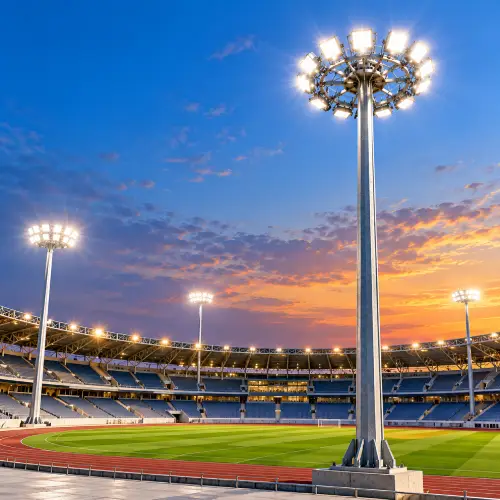
Where Stadium High Mast Poles Make a Difference
- Cricket stadiums and practice grounds: Elevated floodlight mounting for pitches, outfields and training areas.
- Football and hockey facilities: Lighting structures planned around the playing surface, spectator sightlines and applicable sport-specific requirements.
- Athletic tracks: Mast arrangements that consider the running oval, field events and adjoining activity spaces.
- School and university sports campuses: Lighting infrastructure for outdoor courts, playgrounds and multipurpose sports fields.
- District sports complexes: Pole systems for community tournaments, training programmes and organised sporting events.
- Private sports clubs: Outdoor lighting support for grounds used during evening practice and scheduled matches.
- Multipurpose event grounds: Structures for venues that host sporting activities and other outdoor gatherings, subject to the approved lighting plan.
From Boundary Lines to Floodlight Towers: Planning the Right Setup
The effectiveness of stadium lighting depends on how the poles and floodlights work together. Their positions influence shadows, glare, illumination uniformity and visibility for players, officials and spectators. A Stadium Lighting project should begin with a review of the playing area and its intended use. Recreational grounds may have different lighting requirements from competitive venues or televised sporting events.
Important planning considerations include:
- Field geometry: Playing area dimensions, boundary positions and surrounding structures influence mast placement.
- Floodlight aiming: Fixture angles should support the required illumination while limiting glare and unwanted spill light.
- Viewing conditions: Lighting should account for players, spectators, officials and, where relevant, cameras.
- Structural loading: The mast must support the combined weight and wind exposure of its lighting equipment.
- Future requirements: The original design should identify whether additional fixtures may be needed later and whether the structure can accommodate them.
Stadium Pole Designs for Different Sports Venues
- Cricket Ground Lighting Towers
Cricket grounds require lighting across the pitch, outfield and boundary areas. The mast layout and floodlight aiming must be assessed against the intended playing level, ball visibility, camera positions and specified illumination criteria.
- Football Arena Mast Structures
Football lighting needs to support visibility across the playing surface while controlling glare for players and spectators. Pole locations and beam distribution should be selected through a site-specific lighting study.
- Athletics and Multipurpose Ground Poles
Running tracks and multipurpose grounds have different spatial requirements from enclosed playing fields. Mast positions should account for track geometry, adjacent activity zones and the need to limit shadows across the usable area.
- Training Ground Lighting Supports
Training facilities may require a practical lighting configuration suitable for regular evening use. The number of masts, fixture output and mounting height should reflect the ground’s intended activities and budget.
Technical Data Sheet for Stadium High Mast Poles
The following chart outlines key parameters used when preparing a stadium lighting mast specification. These are engineering selection criteria rather than confirmed standard dimensions or ratings for every Tara Maa Electricals product.
Parameter | Technical Description |
Product Name | Stadium High Mast Pole |
Primary Application | Sports field and arena floodlighting |
Typical Design Height | Project-specific; selected through lighting and structural calculations |
Structural Material | Approved structural steel, such as IS 2062 grade where specified |
Pole Geometry | Tapered polygonal or another engineered configuration |
Shaft Construction | Fabricated steel sections designed for the required loads |
Section Joining | Engineered slip joints or other approved connection arrangements |
Floodlight Headframe | Fixed mounting frame or project-specific fixture support arrangement |
Fixture Capacity | Determined by floodlight quantity, weight and structural design |
Lighting Technology | LED sports floodlights or other approved fixtures |
Wind-Load Design | Applicable provisions of IS 875 (Part 3), according to the project criteria |
Surface Protection | Hot-dip galvanizing or specified corrosion-protection system |
Galvanizing Reference | IS 4759 or another applicable approved standard |
Foundation Connection | Base plate and anchor-bolt arrangement as per approved drawings |
Foundation Type | Selected according to structural reactions and geotechnical conditions |
Maintenance Provision | Fixed-access arrangement or engineered lowering system, as specified |
Electrical Provisions | Cable routing, junctions, earthing and controls according to electrical design |
Inspection Requirements | Material, fabrication, dimensional and coating records as specified |
Design Documentation | Structural calculations, drawings and lighting layout as required by the project |
Note: Pole height, steel thickness, fixture capacity, wind rating and foundation dimensions must be verified against the approved design. Sports lighting levels should be determined separately through photometric calculations; they cannot be guaranteed by pole height alone.
The Engineering Behind a Stable Stadium Mast
- Wind Loading on Large Floodlight Arrays
Stadium Poles can carry numerous floodlights, brackets and mounting frames at considerable height. These components create additional wind-exposed surfaces, which must be included in the structural design. Site wind conditions, mast geometry and fixture arrangement all influence the required strength.
- Headframe Geometry and Load Distribution
The headframe must position the floodlights as specified while transferring their loads safely to the mast shaft. Bracket dimensions, attachment details and the arrangement of fixtures should be established during engineering rather than selected solely for convenience.
- Foundation Design for Long-Term Stability
The foundation supports the structural reactions transferred through the pole base. Soil conditions, overturning moments, anchor-bolt forces and the approved mast design determine the foundation requirements. A geotechnical assessment may be necessary for the project.
- Protective Finishing for Outdoor Sports Facilities
Outdoor stadium structures face rain, moisture, pollution and temperature changes. A suitable protective coating helps control corrosion and supports long-term maintenance planning. Surface preparation, coating quality and inspection records should follow the specified requirements.
- Maintenance Access for Elevated Fixtures
Lighting equipment installed at height requires a defined servicing strategy. Depending on the approved design, maintenance may use suitable access provisions or a lowering mechanism. Any lifting arrangement must be engineered for its intended load and operated according to the manufacturer’s instructions.
How Stadium Lighting Requirements Are Evaluated
A stadium project should specify its illumination objectives before the pole arrangement is finalized. The required values vary according to the sport, level of competition and whether the venue is used for recreational play, formal competition or broadcast coverage.
The lighting design commonly evaluates:
- Average horizontal illuminance across the playing surface.
- Vertical illuminance where visibility of players and moving objects requires it.
- Uniformity between brighter and darker areas.
- Glare control for athletes, spectators and officials.
- Light spill beyond the stadium boundaries.
- Energy consumption, switching arrangements and maintenance requirements.
A suitable photometric study using the actual luminaire data helps determine fixture quantity, aiming angles and pole locations. The structural engineer can then assess the mast and foundation against the resulting lighting arrangement.
Why Tara Maa Electricals for Stadium Lighting Pole Enquiries?
Stadium projects involve coordination between civil contractors, electrical consultants, lighting designers and structural engineering teams. Selecting a mast that fits the lighting plan and project specification helps simplify this coordination.
Tara Maa Electricals welcomes enquiries for Stadium High Mast Pole requirements from sports facility developers, contractors, institutional buyers and infrastructure project teams. For a detailed proposal, buyers should share the site layout, playing-field dimensions, lighting requirements, fixture schedule, wind-design criteria and available soil information. These details help establish the scope of the mast structure, headframe, foundation connection and associated provisions.
Stadium Lighting Pole Enquiries Across India
Tara Maa Electricals welcomes project enquiries from:
- Uttar Pradesh
- Bihar
- Jharkhand
- Kolkata
- Odisha
- Karnataka
- Chhattisgarh
- Maharashtra
- Rajasthan
- Gujarat
- Assam
- Meghalaya
Requirements and delivery arrangements depend on the project location, selected configuration, order quantity and approved technical specifications.
Frequently Asked Questions
The number depends on the ground dimensions, lighting class, luminaire performance, mast positions, uniformity targets and glare limitations. A photometric study should determine the layout.
A Stadium Mast is generally configured to support a sports-lighting arrangement with specific requirements for fixture quantity, aiming, visibility and structural loading. A conventional outdoor pole may be designed for a different lighting distribution and smaller fixture arrangement.
Only if the original structural design and electrical provisions allow for the additional loads. Future expansion should be assessed and approved before any fixtures are added.
Hot-Dip Galvanizing is a commonly specified protective treatment for outdoor steel structures. The coating specification should be confirmed according to the applicable standard and project environment.
Depending on the contract, buyers may require approved structural drawings, wind-load calculations, foundation details, material certificates, coating inspection records and the lighting design.
Plan Your Stadium Lighting Infrastructure with Tara Maa Electricals
Whether you are developing a cricket ground, football arena, athletics complex or institutional sports facility, the mast structure should be selected to match the lighting design and site conditions. Contact Tara Maa Electricals with your required pole height, floodlight schedule, ground layout, project location and quantity to discuss your stadium High Mast Pole requirements and request a quotation.